
- What Happened?
- Why It Matters
- Poland Reports Railway Sabotage Linked to Foreign Intelligence
- China Sends Ships and Drones Near Japan’s Islands
- U.S. Deploys USS Gerald R. Ford to Caribbean
- NATO Warns of New Russian Nuclear-Powered Weapon
- Former UK Naval Chief Warns of “Grey-Zone Conflict”
- Summary of Main Events (Past 24 Hours)
- What Happens Next?
- Conclusion
What Happened?
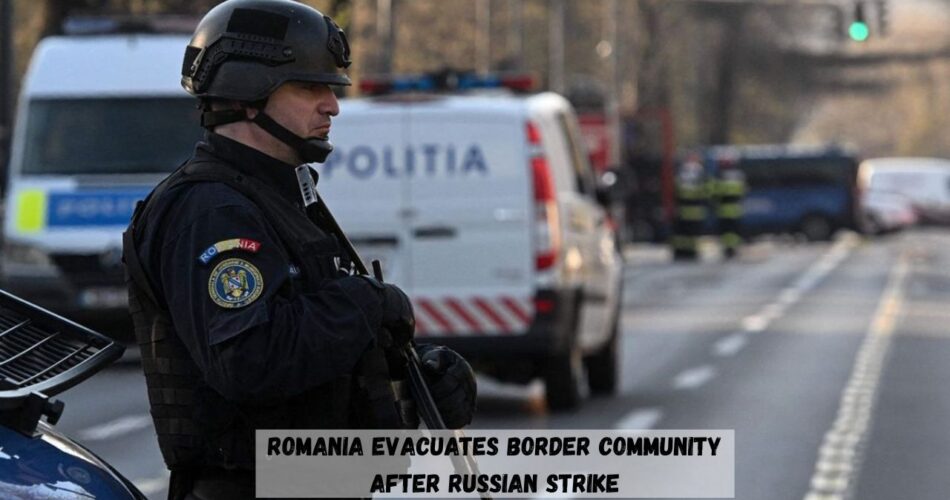
- Romania evacuated the commune of Ceatalchioi.
- A Russian strike hit a gas tanker on the Ukrainian side of the Danube River.
- Fire and explosion risk forced residents, farm animals, and the ship’s crew to leave.
Why It Matters
- This region lies close to NATO territory.
- Any spillover could trigger alliance security concerns.
Key Facts:
| Item | Detail |
|---|---|
| Location | Ceatalchioi, Romania |
| Cause | Russian strike on Ukrainian side |
| Risk | Gas explosion |
| Evacuated | Residents, livestock, ship crew |
Poland Reports Railway Sabotage Linked to Foreign Intelligence
Incidents Reported
- A blast near Mika damaged tracks.
- A second disruption near Puławy also halted trains.
- Polish ministers stated sabotage was “likely linked to foreign intelligence”.
Why This Matters
The rail line is a critical route for military and humanitarian supplies to Ukraine.
Possible Impacts:
- Slower aid to Ukraine
- Higher transport security costs
- Increased NATO alert level
China Sends Ships and Drones Near Japan’s Islands
What Happened?
- Chinese coast guard ships entered waters near the Senkaku/Diaoyu Islands.
- Drones flew near Japan’s outer islands.
Trigger:
Japan’s Prime Minister suggested Japan might respond militarily if China attacks Taiwan.
Background:
- Senkaku/Diaoyu Islands are claimed by both China and Japan.
- The area is a frequent source of tension in East Asia.
U.S. Deploys USS Gerald R. Ford to Caribbean
Deployment Details
- The USS Gerald R. Ford carrier strike group sailed to the Caribbean.
- Official reason: anti-illicit substance operations.
Venezuelan Reaction
- Caracas strongly criticized the move.
- Officials fear it could increase pressure on President Nicolás Maduro.
Political Context
- Former President Donald Trump signaled possible talks with Venezuela.
- The deployment may be seen as military leverage alongside diplomacy.
NATO Warns of New Russian Nuclear-Powered Weapon
The System
- Russia reportedly completed the Burevestnik nuclear-powered cruise projectile.
- NATO describes it as:
- Long-range
- Highly maneuverable
- Hard to detect
Security Risks
- Could bypass European air defense systems.
- Adds pressure on NATO states to upgrade missile shields.
Former UK Naval Chief Warns of “Grey-Zone Conflict”
Statement by Lord West
- UK is already in a “grey-zone confrontation” with Russia.
- Evidence includes:
- Undersea cable probing
- Drone activity
- Military pressure in the Arctic
What Grey-Zone Means
- Conflict without open war
- Includes cyberattacks, covert sabotage, and intelligence operations
Summary of Main Events (Past 24 Hours)
| Region | Event | Risk Level |
|---|---|---|
| Romania | Gas tanker struck by Russia | ⚠️ High |
| Poland | Railway sabotage | ⚠️ Medium |
| Japan | Chinese ships and drones | ⚠️ High |
| Caribbean | U.S. carrier deployment | ⚠️ Medium |
| Europe | Nuclear weapon warning | ⚠️ High |
| UK | Grey-zone pressure from Russia | ⚠️ Medium |
What Happens Next?
- Romania and NATO may increase border security.
- Poland will likely boost rail surveillance and counterintelligence.
- Japan and China could face more aerial and naval standoffs.
- Venezuela–U.S. relations may shift depending on political talks.
- Europe’s defense systems may need upgrades to counter new Russian weapons.
- Experts warn that grey-zone tactics may replace open warfare, creating constant low-level global tension.
Conclusion
The past 24 hours highlight a sharp rise in global geopolitical tensions, with multiple regions facing military threats, sabotage, and strategic maneuvers. From Romania’s evacuation and Poland’s rail disruptions to Chinese activities near Japan and U.S. naval deployments in the Caribbean, the world is witnessing a mix of overt and covert actions by major powers. NATO’s warning on Russia’s new nuclear-capable weapon and the UK’s grey-zone concerns underline the growing complexity of international security.
As these situations develop, nations are likely to increase defensive measures, intelligence monitoring, and diplomatic engagement to prevent escalation, making the coming days crucial for global stability.