
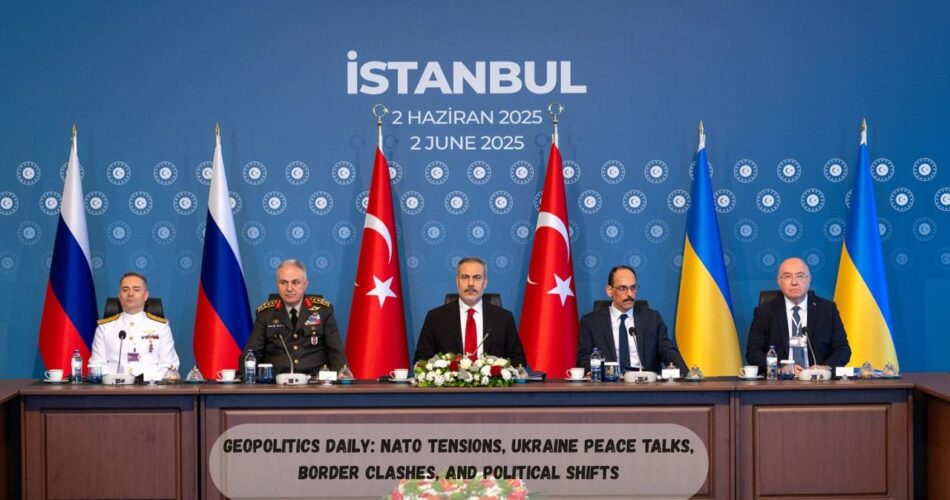
In the last 24 hours, major geopolitical developments unfolded across Europe, Asia, and Latin America. Russia, Ukraine, NATO, Thailand, Cambodia, Chile, and several European Union (EU) countries were at the center of key events. These included sharp diplomatic exchanges between Russia and NATO, Ukraine signaling flexibility ahead of peace talks, a new military offensive in Southeast Asia, a presidential election in Chile, and growing divisions within the EU over how to fund support for Ukraine. The developments happened on December 15, 2025, across Europe, Southeast Asia, and South America, driven by ongoing security concerns, elections, and financial debates linked to the war in Ukraine.
Rising Tensions Between Russia and NATO
Kremlin Responds to NATO War Preparedness Comments
The Kremlin strongly criticized NATO Secretary General Mark Rutte after he said the alliance should prepare for a possible war with Russia. Russian officials described the statement as:
- Irresponsible
- Dangerous
- Historically insensitive
According to Moscow, Rutte failed to understand the scale of destruction caused by World War Two, a conflict that resulted in more than 60 million deaths worldwide, including heavy losses in the former Soviet Union.
Russian spokespersons warned that such rhetoric could increase mistrust and raise the risk of escalation between NATO and Russia.
Ukraine Signals Shift Ahead of Berlin Peace Talks
Zelenskyy Offers NATO Ambition Trade-Off
At the same time, Ukrainian President Volodymyr Zelenskyy said Ukraine is willing to drop its ambition to join NATO. In return, Kyiv wants:
- Legally binding security guarantees
- Commitments from the United States
- Support from European partners
- Backing from other allied nations
Peace Talks in Berlin
These remarks come ahead of peace talks in Berlin, where:
- US envoys
- European leaders
- Ukrainian representatives
are expected to discuss possible paths toward ending the conflict with Russia. The talks aim to balance Ukraine’s long-term security needs with concerns raised by Russia about NATO expansion.
Thailand Launches Military Offensive Against Cambodia
Border Dispute Escalates
In Southeast Asia, Thailand announced it launched a new military offensive against Cambodia. The operation followed Cambodia’s decision to close all border crossings between the two countries.
Thai military officials said:
- Heavy clashes were reported
- Fighting occurred in multiple frontier areas
- Operations are ongoing
Long-Running Border Tensions
Thailand and Cambodia have a history of disputes over border areas, particularly near ancient temple sites. Previous clashes have led to casualties on both sides and strained diplomatic relations.
Chile Elects Right-Wing President
José Antonio Kast Wins Presidential Election
In South America, José Antonio Kast, a right-wing politician, was elected Chile’s next president. Official results showed:
| Candidate | Political Alignment | Vote Share |
|---|---|---|
| José Antonio Kast | Right-wing | 58.16% |
| Jeannette Jara | Left-wing | 41.84% |
Campaign Promises
Kast campaigned on pledges to:
- Tighten national security
- Expel undocumented migrants
- Strengthen law enforcement
His victory marks a significant political shift in Chile, which has seen years of debate over economic reforms, crime, and immigration.
EU Divided Over Using Frozen Russian Assets
Czechia Opposes €210 Billion Ukraine Loan Plan
In Europe, Czechia joined Belgium and several other EU states in opposing a proposal to use frozen Russian assets to support a €210 billion loan for Ukraine.
Incoming Czech prime minister Andrej Babiš said:
- Czechia will not provide guarantees
- The country will not contribute funding
- Alternative financing methods should be explored
Ongoing EU Debate
The proposal is part of broader EU efforts to support Ukraine financially while avoiding legal and economic risks tied to using seized Russian funds.
What Happens Next?
Global leaders now face several critical decisions:
- Whether NATO and Russia can reduce tensions through diplomacy
- If Ukraine’s security guarantees can replace NATO membership ambitions
- How Thailand and Cambodia manage the escalating border conflict
- How Chile’s new leadership reshapes domestic and foreign policy
- Whether the EU can agree on a unified financial strategy for Ukraine
The coming days, especially the Berlin peace talks, may play a key role in shaping the next phase of global geopolitics.