
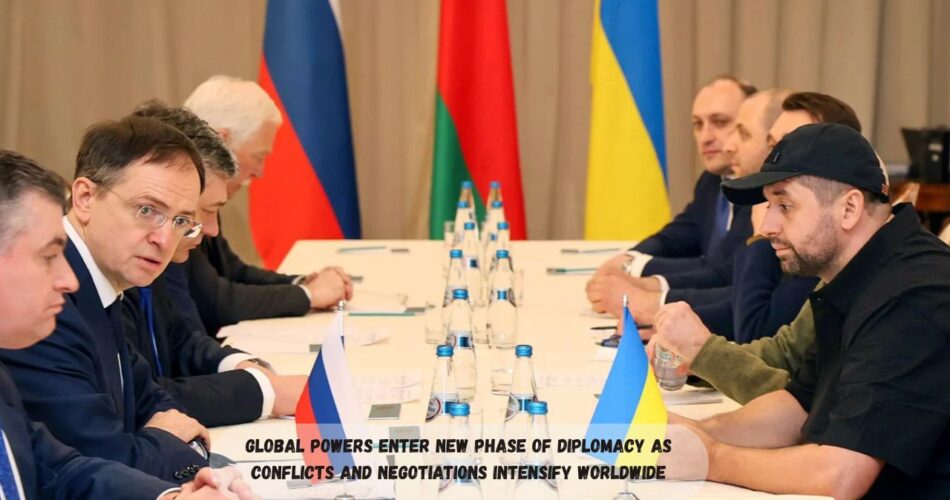
Major geopolitical developments unfolded across Europe, Asia, Africa, and Central Asia on November 25, 2025, as leaders held high-level talks, reviewed peace proposals, and reacted to ongoing regional conflicts. These events reflect shifting alliances, unresolved disputes, and the growing pressure for diplomatic solutions amid global tensions.
- Ukraine Peace Discussions Intensify as Zelensky Supports Revised Plan
- Xi and Trump Hold Rare Phone Call Focused on Taiwan, Trade, and Global Stability
- Sudan’s Army Claims to Repel RSF Attack on Babnousa
- Local Accounts Continue to Highlight Intense Fighting
- Putin Begins High-Level State Visit to Kyrgyzstan
- Global Developments at a Glance
- What These Global Shifts Mean
Ukraine Peace Discussions Intensify as Zelensky Supports Revised Plan
Ukrainian President Volodymyr Zelensky has endorsed new revisions to a previously debated 28-point peace proposal, marking a significant step in ongoing diplomatic efforts to end the conflict with Russia. The original document included several points that Ukrainian officials viewed as leaning toward Russian strategic objectives, especially regarding security zones and political arrangements in contested regions.
European partners responded to Kyiv’s concerns and removed or reworded those disputed clauses. Zelensky’s approval of the updated version suggests a growing willingness among Ukraine and its allies to move toward a framework that could eventually lead to formal negotiations.
Geneva Talks Focus on a Shortened 19-Point Plan
At the same time, US and Ukrainian diplomats met in Geneva to discuss a shortened 19-point version of the peace plan. This version condenses the most urgent items and leaves the most politically sensitive issues for national leaders to resolve at a later stage.
Officials involved in the Geneva meeting reported that the new format may help negotiators focus on areas where agreement is more likely, while postponing deeper disputes over territory and long-term security guarantees.
Topics included in the 19-point draft:
- Humanitarian corridors
- Prisoner exchanges
- International monitoring mechanisms
- Ceasefire conditions
- Steps to secure critical infrastructure
- The role of international observers
Russian officials quickly dismissed the revisions introduced by European countries, arguing that they ignored Moscow’s long-standing concerns. Meanwhile, the White House rejected claims that the United States was favoring Russia in the discussions, stressing that Washington supports Ukraine’s sovereignty and territorial integrity.
European governments signaled that more talks are expected in the coming weeks. However, they acknowledged that no final agreement is close, and disagreements remain across multiple points.
Xi and Trump Hold Rare Phone Call Focused on Taiwan, Trade, and Global Stability
In a separate major development, Chinese President Xi Jinping held a phone call with US President Donald Trump, marking one of the most politically sensitive conversations between the two leaders since the start of Trump’s second term.
During the call, Xi emphasized that Taiwan’s “return to China” is central to the post–World War II international order. His statement reflects Beijing’s long-held view that Taiwan is an inseparable part of China. The White House confirmed that the call took place but did not release specific details about Xi’s remarks.
Both governments said the call covered several important issues:
- Bilateral relations
- Trade and investment flows
- Security tensions in the Taiwan Strait
- The war in Ukraine
- Plans for reciprocal high-level visits by both leaders
Beijing described the conversation as productive and said it demonstrated improving ties between the two largest economies in the world. Chinese officials encouraged continued cooperation on trade, technology, and global security matters. Washington, however, kept its messaging brief, likely due to the sensitive nature of Xi’s comments on Taiwan.
A Turning Point or a Temporary Pause?
Analysts say the phone call could mark a shift in US-China relations after years of rising tensions over technology controls, military activities, and geopolitical influence.
If reciprocal visits take place, they would be the first direct meetings between the leaders since 2023.
Sudan’s Army Claims to Repel RSF Attack on Babnousa
The conflict in Sudan continues with no sign of resolution, as a Sudanese military source reported that the Sudanese Armed Forces (SAF) repelled an attack by the Rapid Support Forces (RSF) on the western town of Babnousa.
The source claimed that the army used both heavy and light weapons to push back the attackers, adding that the RSF suffered “major losses.” However, neither the SAF nor the RSF released official public statements confirming details of the clash.
Local Accounts Continue to Highlight Intense Fighting
Residents and local reporters stated that the RSF attempted several assaults on Babnousa throughout the day. The city sits along key transportation routes in West Kordofan, making it strategically important for both sides.
Local reports describe:
- Ongoing road closures
- Shortages of fuel and food
- Disruptions to humanitarian operations
- Increased risk of displacement
The fighting is part of a wider conflict that broke out in April 2023, when tensions between Sudan’s military and the RSF escalated into full-scale war. According to international observers, more than 10 million people have been displaced since the conflict began, creating one of the world’s worst humanitarian crises.
Putin Begins High-Level State Visit to Kyrgyzstan
Russian President Vladimir Putin arrived in Kyrgyzstan for a three-day state visit aimed at strengthening political, economic, and security cooperation across Central Asia. Relations between Russia and Kyrgyzstan remain strong, and the visit highlights Moscow’s effort to maintain influence in a region where other powers—including China and Turkey—are increasing their presence.
Meetings and Events Planned During the Visit
Putin’s schedule includes:
- Bilateral talks with Kyrgyz President Sadyr Japarov
- Signing of new cooperation agreements
- A meeting with Belarusian President Alexander Lukashenko
- Participation in the Collective Security Treaty Organization (CSTO) summit
The CSTO, a Russian-led military alliance of several post-Soviet states, is expected to discuss regional security, counterterrorism strategies, and the impact of global instability on member states.
Kyrgyzstan often plays a balancing role between major powers, and the visit forms part of broader diplomatic efforts by Moscow to strengthen alliances amid growing global competition.
Global Developments at a Glance
| Key Issue | Region | Major Actors | Summary of Events |
|---|---|---|---|
| Ukraine Peace Talks | Europe / Geneva | Zelensky, EU leaders, US diplomats | Revised proposals discussed; no final deal |
| US–China Relations | Asia / US | Xi Jinping, Donald Trump | Leaders discuss Taiwan, trade, Ukraine |
| Sudan Conflict | Africa | SAF, RSF | Army claims to repel RSF assault on Babnousa |
| Russia–Central Asia Ties | Central Asia | Putin, Japarov, Lukashenko | Putin begins 3-day visit and attends CSTO summit |
What These Global Shifts Mean
The events of the past 24 hours show how interconnected global politics have become. Peace talks in Europe, strategic conversations between the US and China, violent clashes in Sudan, and Russia’s outreach in Central Asia all shape the international landscape.
Possible outcomes in the weeks ahead include:
- More rounds of Ukraine peace discussions in Europe
- A potential meeting between Trump and Xi
- Continued instability in Sudan, with humanitarian needs rising
- Strengthened Russia–Kyrgyzstan cooperation through CSTO agreements
As global tensions evolve, diplomats and world leaders are trying to balance competition with cooperation. The next steps taken by each side will determine whether these developments lead to progress, new disagreements, or deeper crises.